
Out of Palaceside Building for a little more walk around Edo Castle (Imperial Palace) Tayasu Gate.
I wrote of Matsudaira Sadanobu; of the Tayasu house one more cannot be omitted: late-bakumatsu Fukui lord Matsudaira Yoshinaga, that is Shungaku (photo above), Fukui City Museum of Local History.
Born 1828 as eighth son of Tayasu third head Narimasa, from the Hitotsubashi house; childhood name Kinnojo. He was set to be adopted by Matsudaira Katsuyoshi of Iyo-Matsuyama, but in July 1838 (Tempo 9) Echizen Fukui lord Matsudaira Narisawa died suddenly at 19. With no heir, Kinnojo was hastily adopted and in October succeeded to the Echizen Matsudaira at only 11. Later Shungaku, with Mito lord Tokugawa Nariaki, opposed Tairo Ii Naosuke. After Ii’s fall, in 1862 (Bunkyu 2) he took the new post of seiji sosai, set up with later fifteenth shogun Hitotsubashi Yoshinobu the Kyoto shugoshoku, placed Aizu lord Matsudaira Katamori in it, and pushed “union of court and bakufu,” including shogun Tokugawa Iemochi’s going to Kyoto. He then thought of abandoning Echizen, taking Kyoto with the whole army, siding with neither court nor bakufu, checking excess factional strife by force, recruiting widely and advancing gentle reform; he asked Kumamoto and Kaga as well as Satsuma to join, but in the end gave it up — a dizzying life.
That he poured himself into domain reform and was sung as one of the four wise lords of bakumatsu is another side (the other three: Tosa 15th Yamauchi Toyoshige = Yodo; Satsuma 11th Shimazu Nariakira; Uwajima 8th Date Munenari). In the bakumatsu turmoil he plotted this and that, moved as adjuster among forces and was tossed about; after a stormy course, little came of it.
At the restoration of power he is said to have advised Yoshinobu; in the new government he briefly held inland affairs governor, minbu official, minbu-kyo, okura-kyo and more, but left politics early (1870 = Meiji 3) and died in 1890 (Meiji 23) at 61.
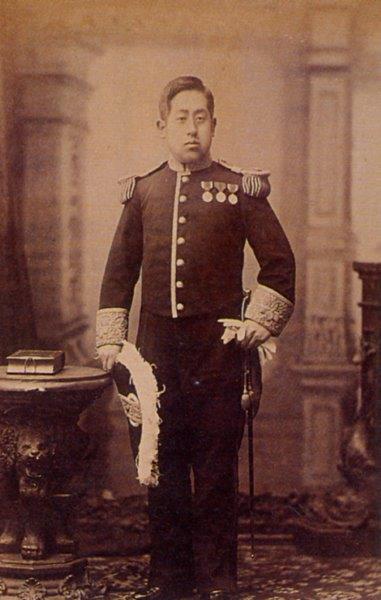
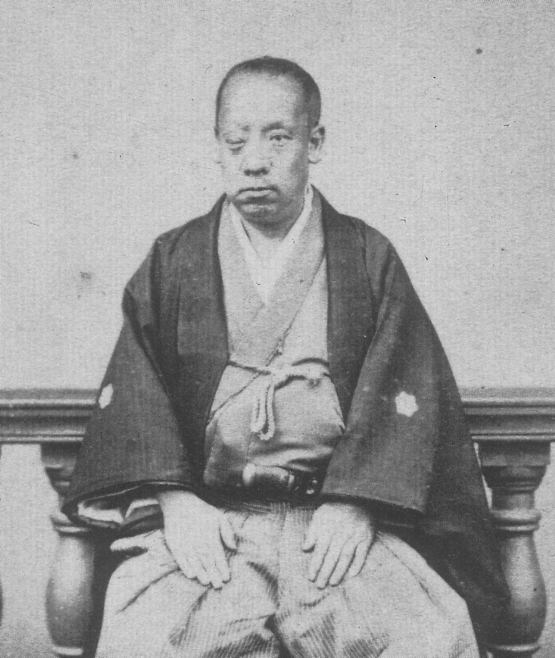
Of the Tayasu house besides: after Yoshinobu’s confinement, in 1868 (Meiji 1) seventh head Kamenosuke inherited the Tokugawa main line as sixteenth Iesato — photo at lower left, private collection, Wikipedia — and his father, fifth head Yoshiyori — photo at lower right, Fukui City Museum — returned as eighth Tayasu head. Iesato was ranked among the kazoku as “the sixteenth,” given a princely title, and served as president of the House of Peers.