

Before the rainy season, Palaceside Building held a “flood-defense drill” on Sunday, May 29, against water damage.
Forty people took part: Mainichi Building staff and those from Aing (security), Globe Ship (facilities) and Seibi (cleaning).
This year they also actually stacked sandbags. Sandbags are placed at about ten spots on B2, the fifth and sixth floors, 400 bags always on hand. From a B2
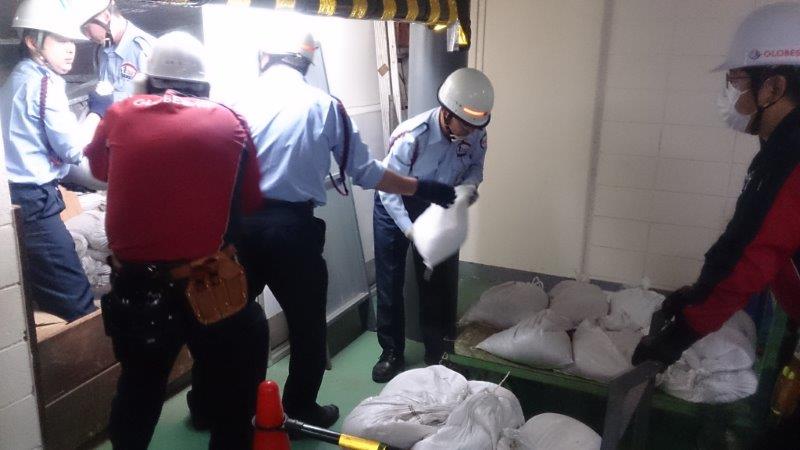
spot they were carried out (photo at left); a blue sheet was first laid at the east first-floor main entrance, then bags stacked on it. It is not about looks, but if they are piled sloppily with gaps, water gets in, so lining them neatly is the point (photo at the very top, left). Not only stacking: tapping with a kake-ya (large wooden mallet) to close gaps is also important (photo at upper right).
Each bag is about 10 kilograms. The day was quite muggy, so everyone worked soaked in sweat.
Before stacking, in the morning they drilled sealing two building entrances that lead to the Tokyo Metro Takebashi Station gates on B2 with flood doors. Floor blocks and ceiling iron plates were removed per the manual; two-part flood doors to the ceiling (about 20 centimeters thick), stored deep behind the kiosk beside the gates (front right of the building entrance), were pulled out (photos at lower left and center), fixed, then iron props fitted from the building side so they would not yield to water pressure (photo at lower right). The entrance from the subway gates to the west elevator tower was likewise sealed by closing the swing
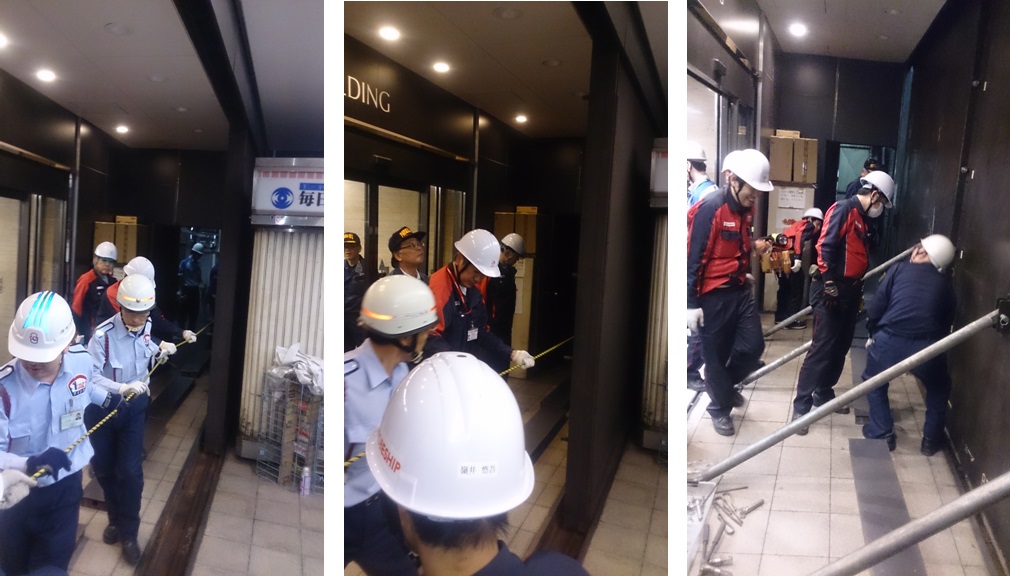
doors.
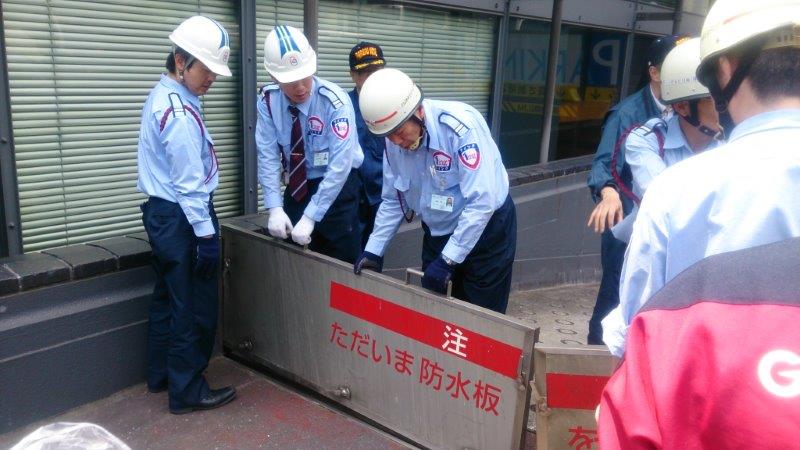
They also drilled setting a flood board at the top of the parking entrance ramp (photo below).
After that they walked around Palaceside Building and checked flood-risk spots. Places that need sandbags to stop water — door gaps, broken brick around the perimeter — were confirmed again by everyone.
The Kanto rainy season usually begins June 8. In recent years guerrilla cloudbursts have been frequent;
one cannot let the guard down. I again took to heart that regular drills with a crisis-management mind are vital so one can respond quickly when it counts.