
Palaceside Building held an “earthquake-response drill” on April 27. An “aid station” was set up beside the east first-floor main entrance; about 50 people took part in a scenario of treating many injured.
Mainichi Building runs large fire drills on the roof in spring and autumn with tenants; besides those, several times a year it works on earthquake-response drills with building staff and partner-company people for security, facilities and cleaning.
The scenario this time, as usual, was a “magnitude 6-lower quake,” but with many serious and slight injuries such as shelves falling in a first-floor shop — photo above — the focus was rescue, first aid, and actually opening an “aid station.”
At 10:00 a.m. a loud “Drill earthquake!!” started it. The building lost power; they confirmed the steps of starting the emergency generator at once. When the shaking stopped, staff of each Mainichi Building section and partners Aing (security), Groove Ship (facilities) and Seibi (cleaning) reported headcounts and safety one after another; at the same time an “earthquake countermeasures HQ” was formed with the Mainichi Building president as chief. Facilities staff set out to inspect the building per the manual and that day’s command.
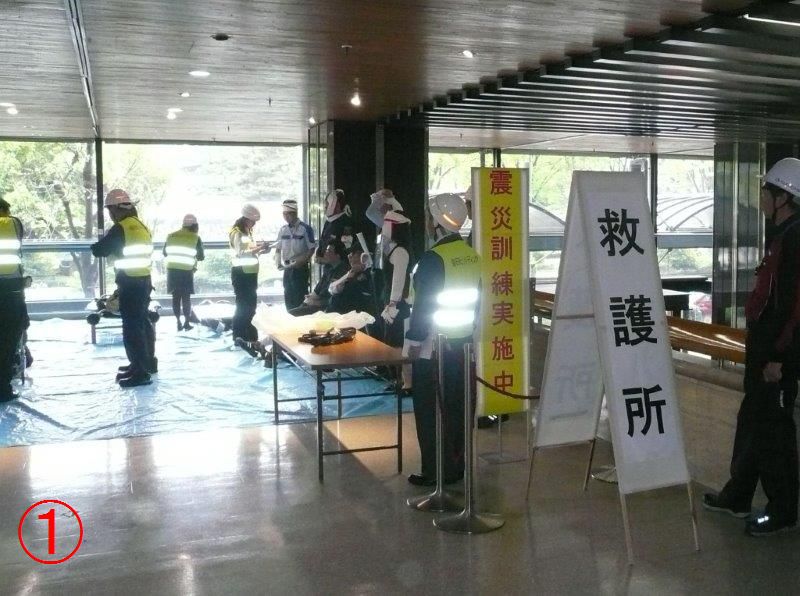
Then word reached HQ of “shelves collapsed at a west first-floor shop”; staff on inspection were called back and people were sent to the collapse. Hearing of many injured, the HQ chief (Mainichi Building president) ordered an “aid station”; staff brought first-aid supplies, AEDs, blue sheets, blankets, chairs, desks and folding beds from the fifth-floor office and east and west warehouses on B2 and set up the station on the first-floor east (photo ①).
At the collapse, in the meantime,
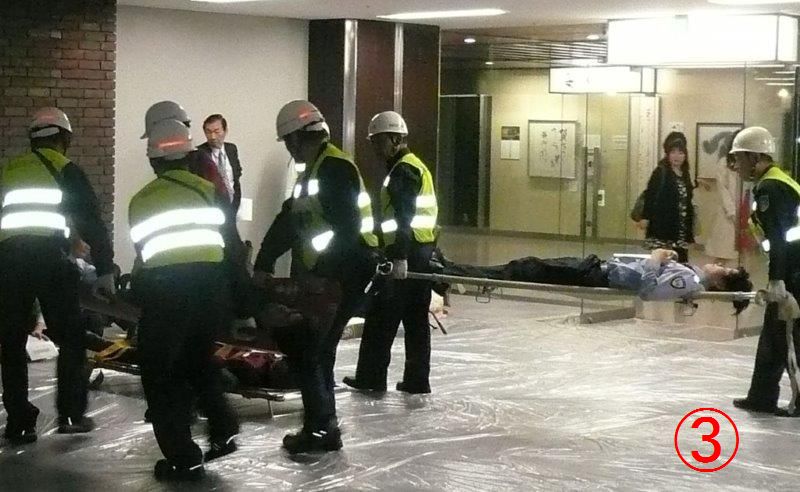
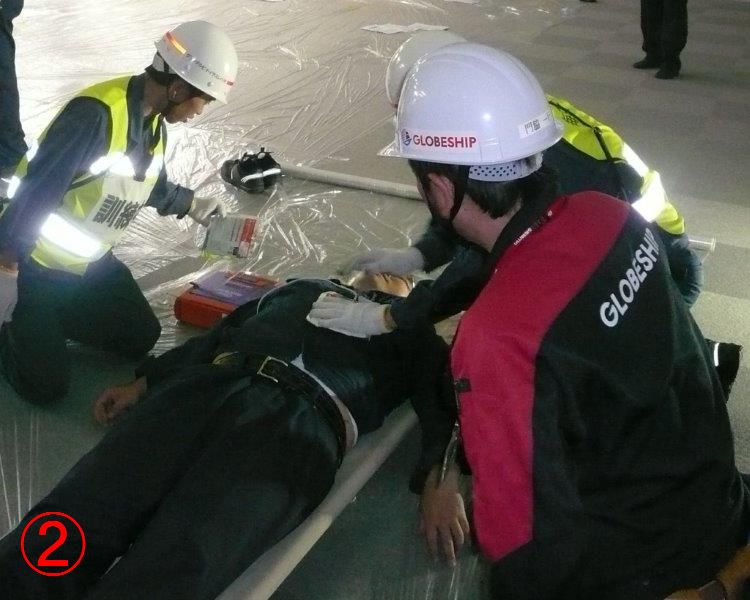
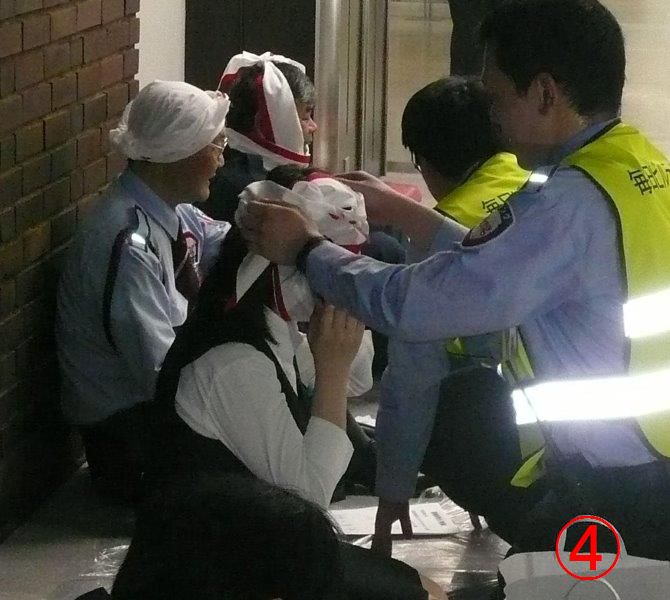
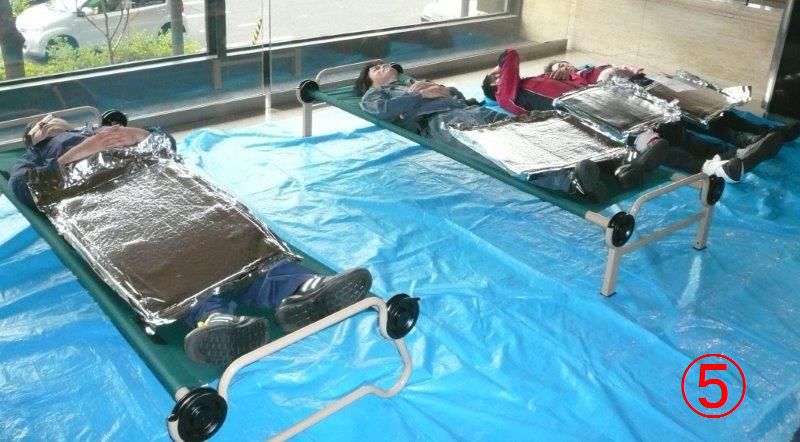
arriving staff pulled the injured from under fallen shelves, tried to revive a person who had stopped breathing with artificial respiration and an AED (photo ②), and carried the restored serious cases on stretchers to the aid station (photo ③). Slightly injured people were given triangular-bandage first aid (photo ④) and those who could not walk were put in wheelchairs and guided there. The injured were placed on folding beds and chairs assembled at the station — photo ⑤ — and 119 was called to send the serious cases to hospital — the full sequence.
From 11:00 a.m., after the drill, a review meeting listed not only what went well but also missed reports, incomplete orders, slow response and short supplies,
and confirmed future tasks.
Mainichi Building puts safety first: besides hard measures on facilities, it will keep drilling so that in a real event people can act without panic, and will also build up the soft
side.