

It is autumn. Across from Palaceside Building, the East Gardens of the Imperial Palace too have left the spring–summer flower feast and entered the season of fruit.
The once-splendid Ninomaru Garden now looks autumnal. Raise your eyes slightly and walk from the Ninomaru grove toward Nakagarasu-mon and the Honmaru site, and trees with vivid red fruit appear one after another.
Photo above is kamatsuka (Rosaceae) in the grove. Search online and you get a carp-family fish — this is a plant. Both fish and plant use the kanji 鎌柄; the fish name comes from flesh hard as a sickle handle or firm when cooked; the plant from hard wood used for sickle handles, with the alias “ushikoroshi” from use in cattle nose rings — though one grim tale says cattle horns caught in branches cannot be pulled free.
A deciduous tree of sunny forest edges from Hokkaido to Kyushu, 5–7 m tall, dark gray wrinkled bark with mottling. White flowers about 1 cm across in clusters of 10–20 bloom April–June; fruit ripens red October–November
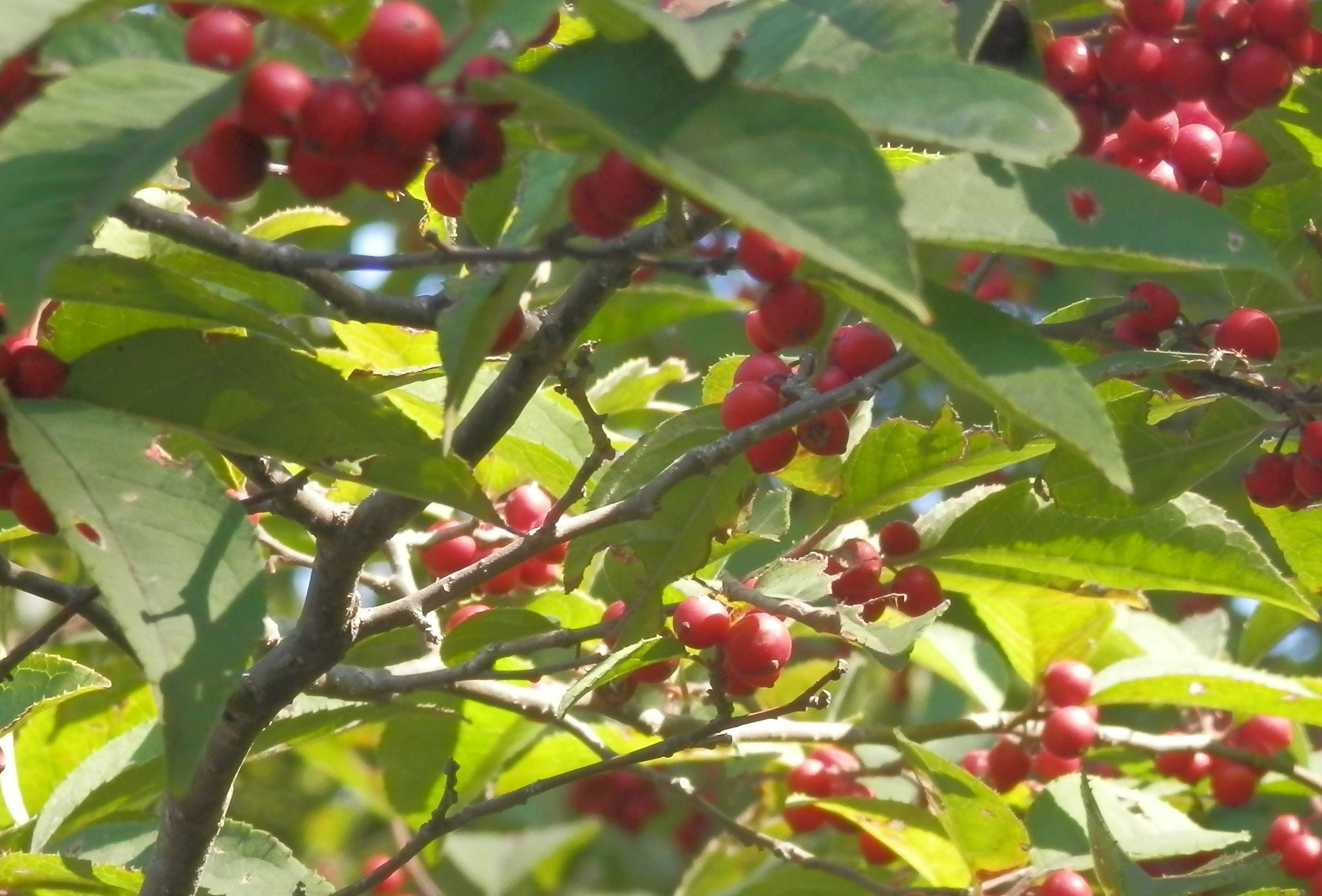
— cute elliptical berries 7–9 mm.
Umemodoki (Staphyleaceae) just past Nakagarasu-mon=photo right= is written 梅擬 — “like plum,” though whether leaves or flowers resemble plum is unclear. A deciduous shrub 2–3 m in mountains and wetlands from Honshu to Shikoku and Kyushu; pale purple flowers around June. Spherical fruit about 5 mm, favored by small birds. Green leaves remain now; after they fall in late autumn and early winter, red fruit alone will fill the branches — a different charm.
We found other red-fruited plants too. Report next time.