

The 76th annual festival of Mainichi Shrine on the roof of Palaceside Building was solemnly held on October 19.
It is the second festival since the shrine was renewed a little over a year ago with fresh hinoki timber and torii. Under a cloudless sky with Tokyo Skytree to the northeast, the white of the special tent stood out=photo above.
As in past years, executives and managers led by President Yutaka Hinata of The Mainichi Newspapers, President Tsuneo Haneda of Mainichi Building Co. and representatives of related companies, plus Kyodo News President Masayoshi Fukuyama — Kyodo jointly operates helicopters with The Mainichi — joined the Nippon-go captain and first officer’s bereaved families, Mitsubishi Heavy Industries which built Nippon-go, and many from Japan Airlines and All Nippon Airways
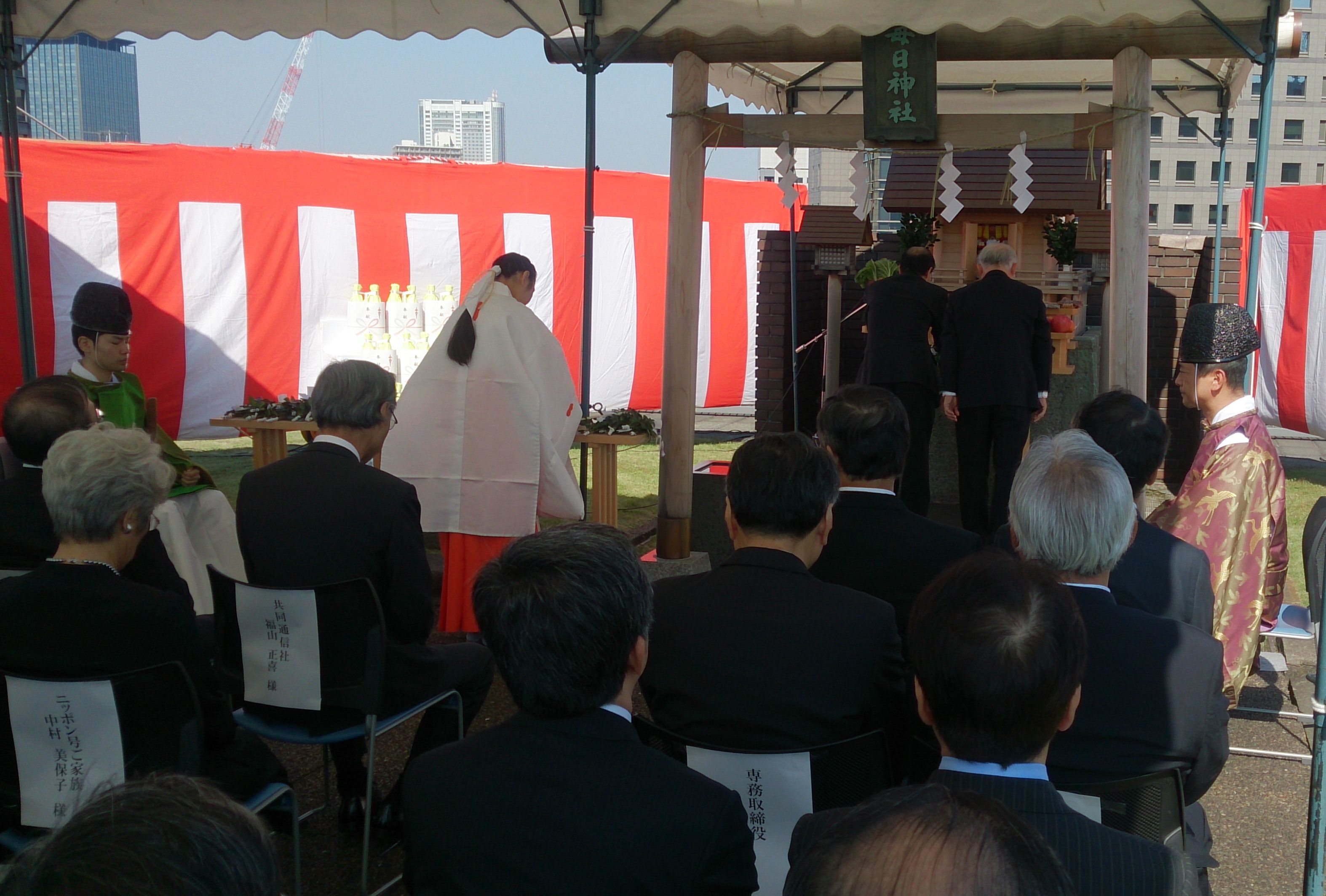
After purification and norito, attendees offered tamagushi in turn=photo right.
Corporate-affiliated shrines are not rare. Toyota Motor’s headquarters city Toyota, Aichi, has Hōkō Shrine, nicknamed “Toyota Shrine,” at the northwest corner of the main plant — built two years after Toyota was founded (1937); on the first workday each year the president and executives reportedly all visit.
Tosa Inari Shrine in Osaka, nicknamed “Mitsubishi Inari,” is said to have been moved by Mitsubishi founder Yatarō Iwasaki. Mimeguri Shrine (Sumida, Tokyo) was made guardian by the Mitsui family in the Kyōhō era of the early 18th century.
Many company shrines pray for business prosperity and employee safety; Mainichi Shrine is different. In 1939 (Shōwa 14), The Mainichi Newspapers (then Tokyo Nichi Nichi and Osaka Mainichi) completed a world flight in the twin-engine “Nippon.” The shrine was founded then, enshrining many omamori sent nationwide for flight safety. The newspaper was in Yurakucho then; when headquarters moved to Palaceside Building in 1966, the shrine moved too.
The enshrined deities are Amaterasu and Ōyamakui-no-kami. For Ōyamakui, the head shrine is Hiyoshi Taisha at the foot of Mt. Hiei (Ōtsu). Ōta Dōkan invited Ōyamakui from Kawagoe Hiyoshi to build Hie Shrine near Akasaka as Edo Castle’s guardian; in the Edo period it was the Tokugawa ujigami, and after Meiji it guards the Imperial Palace.
Because of Ōyamakui, priests from Hie Shrine always attend Mainichi Shrine; this day two shrine staff and two gagaku musicians came, and the sound of shō (bamboo mouth organ) and ryūteki flute filled the venue.