
We toured the plant of Tōnichi Printing (Etchūjima 2, Kōtō Ward), which prints The Mainichi Newspapers.
From Takebashi Station near Palaceside Building, four stops on the Tokyo Metro Tozai Line, then a ten-minute walk from Monzen-nakachō. It sits next to Tokyo University of Marine Science and Technology. The name "Tōnichi" comes from the predecessor "Tōkyō Nichi Nichi Shimbun," abbreviated "Tōnichi Shimbun." Newspaper printing was once done in-house, but printing only your own paper left presses idle too much
— so spinning it off to a subsidiary for contract printing became the norm.
The Mainichi Newspapers follows that path, outsourcing to subsidiaries including Tōnichi Printing. When printing was in-house, there was a plant under Takebashi; outsourcing ended Takebashi printing in fiscal 2002.
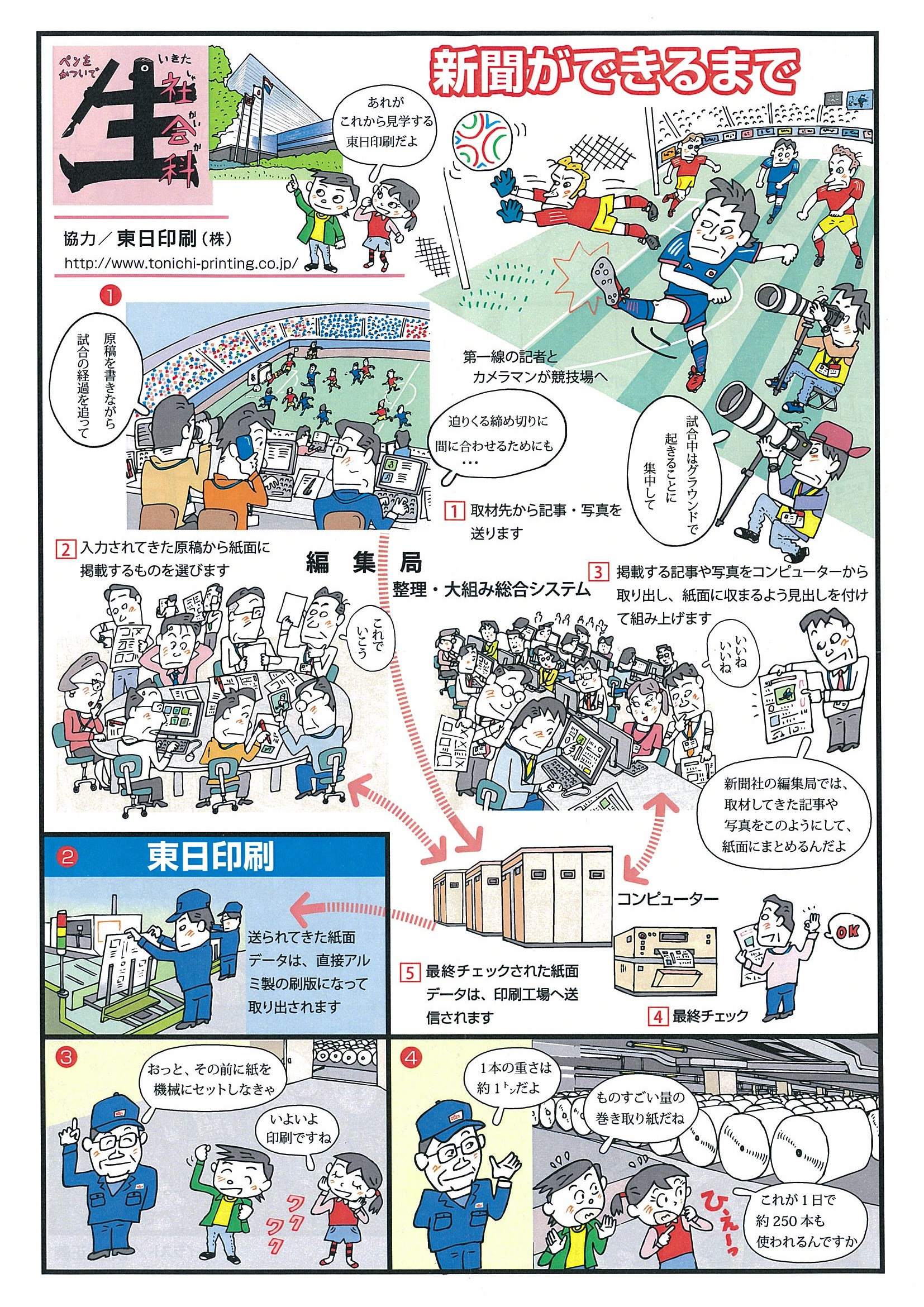
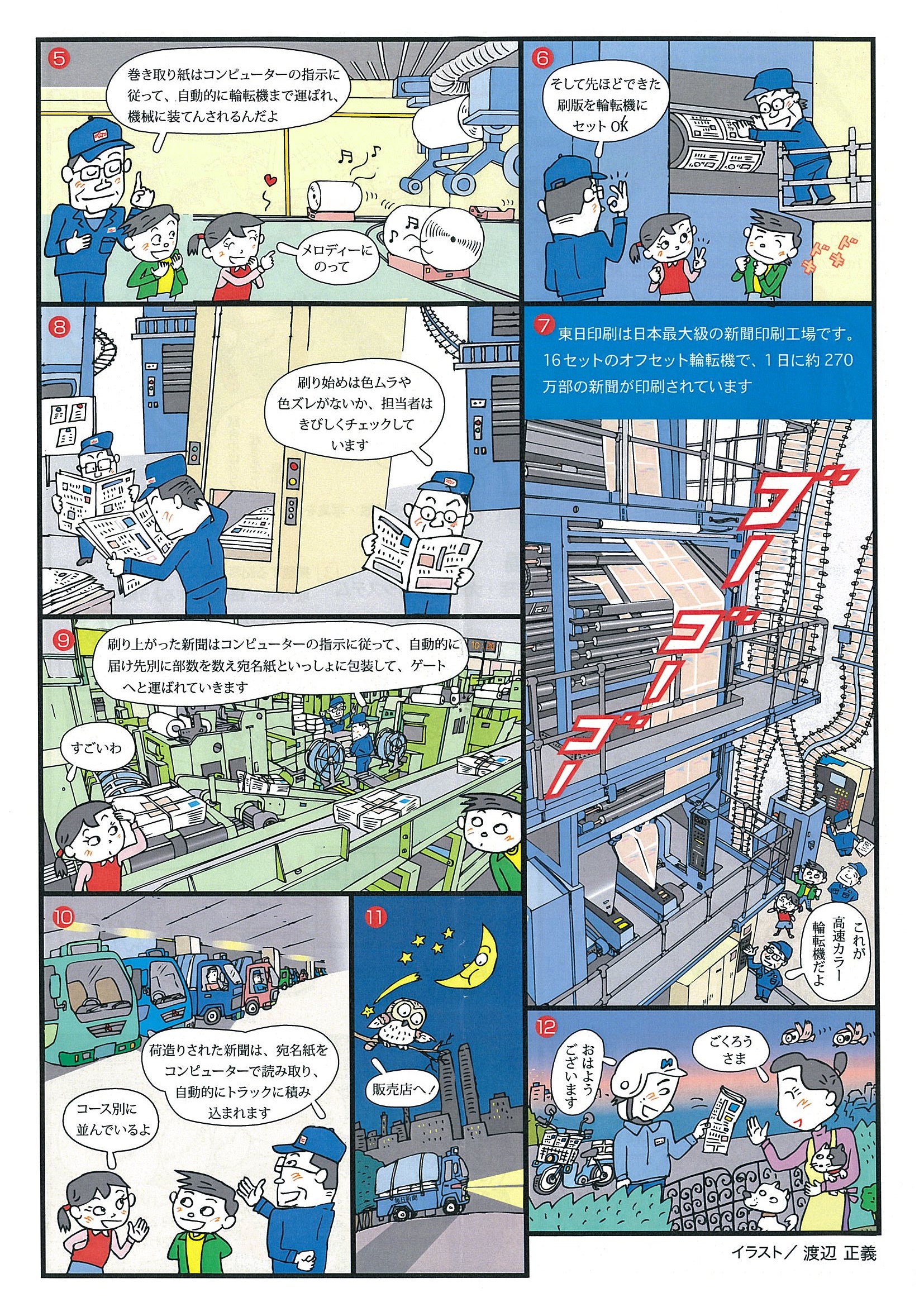
At Tōnichi's factory: see the manga at the end (provided by Tōnichi
) for the overall flow, but we took many photos on the tour, so here they are.
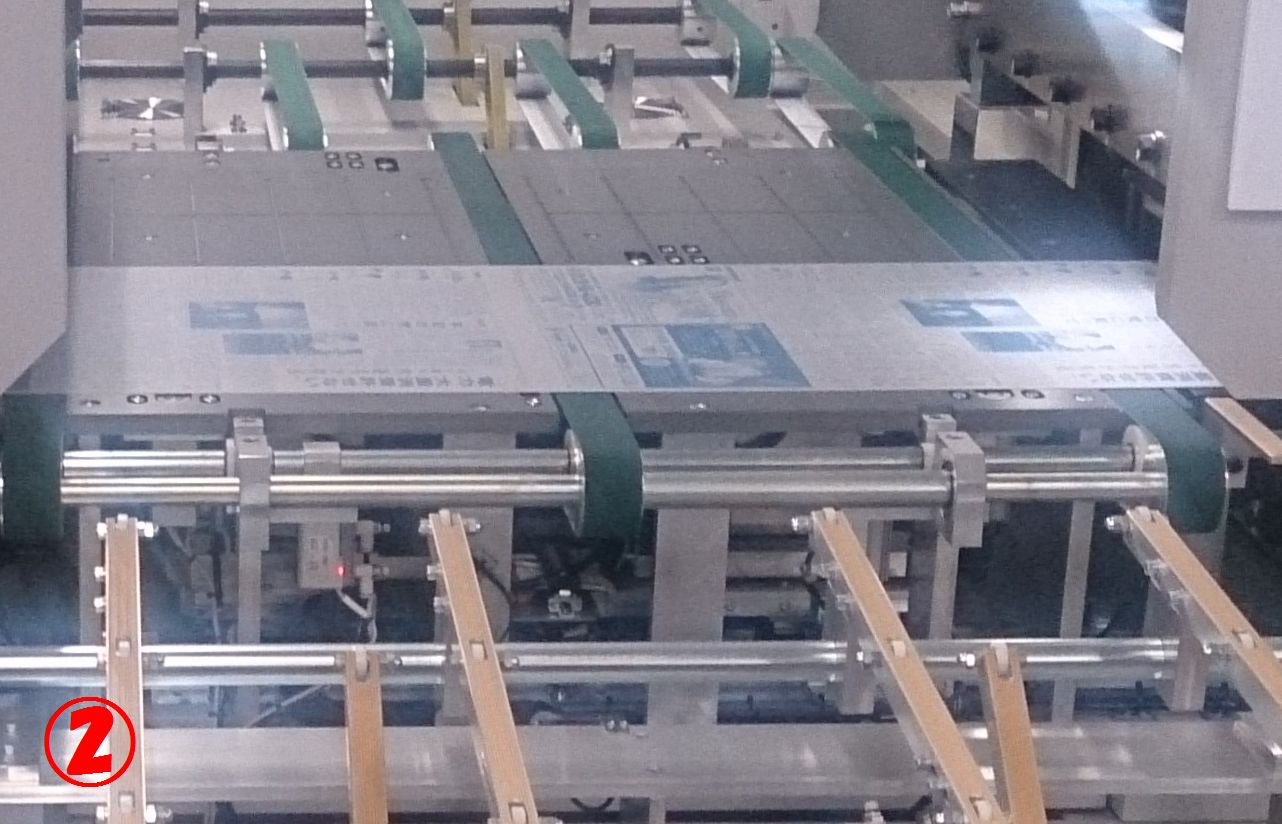
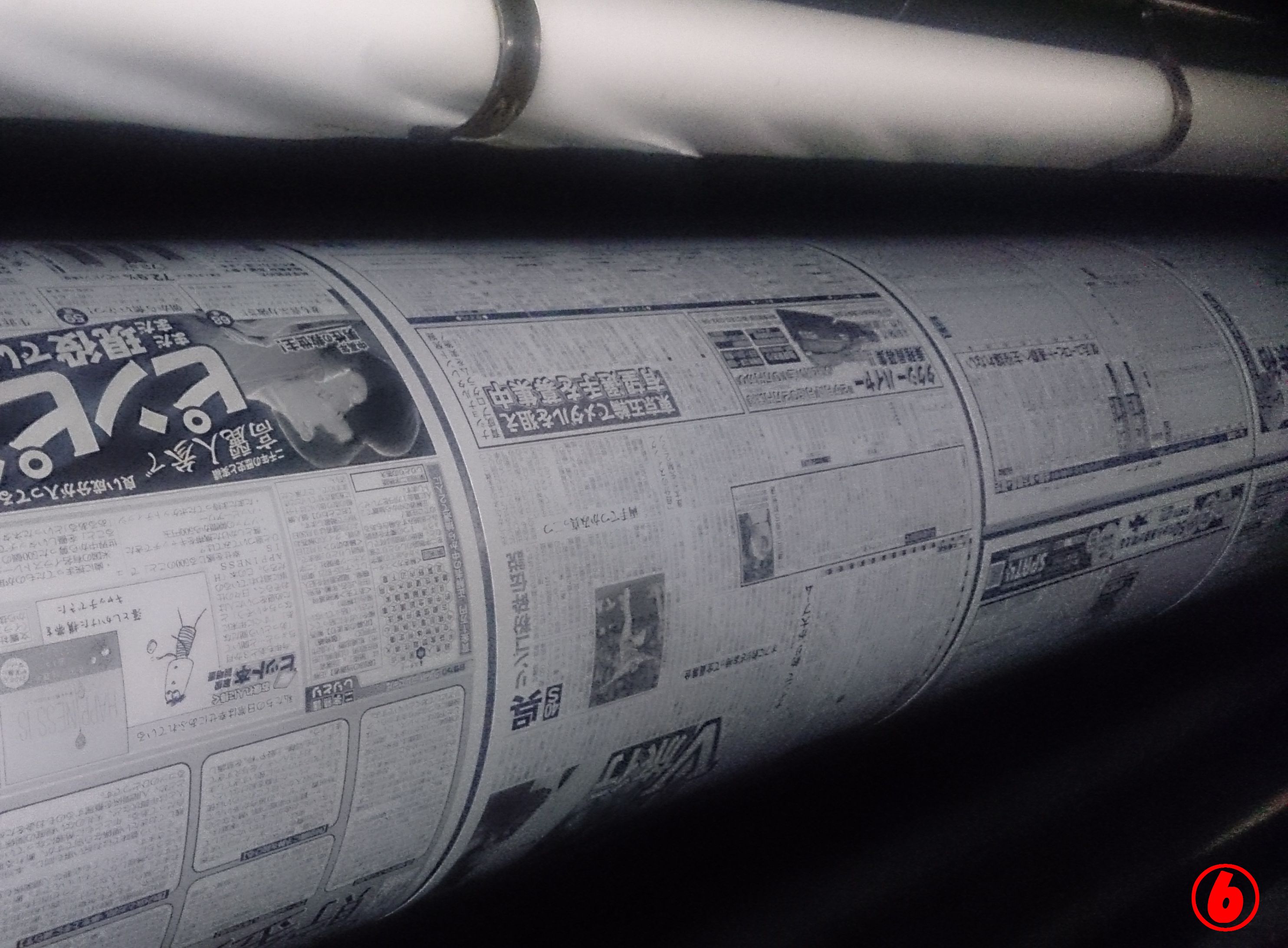
First, platemaking ② (circled numbers match the end manga). The "plate" is a thin metal sheet, almost like stiff paper. Layout data finished at the newspaper is transmitted and printed directly onto the plate. Plates are high-purity aluminum with a special coating; laser exposure dissolves aluminum slightly where light hits, leaving type and images raised. Monochrome pages need one plate; color needs four — cyan, magenta, yellow and black — per page.
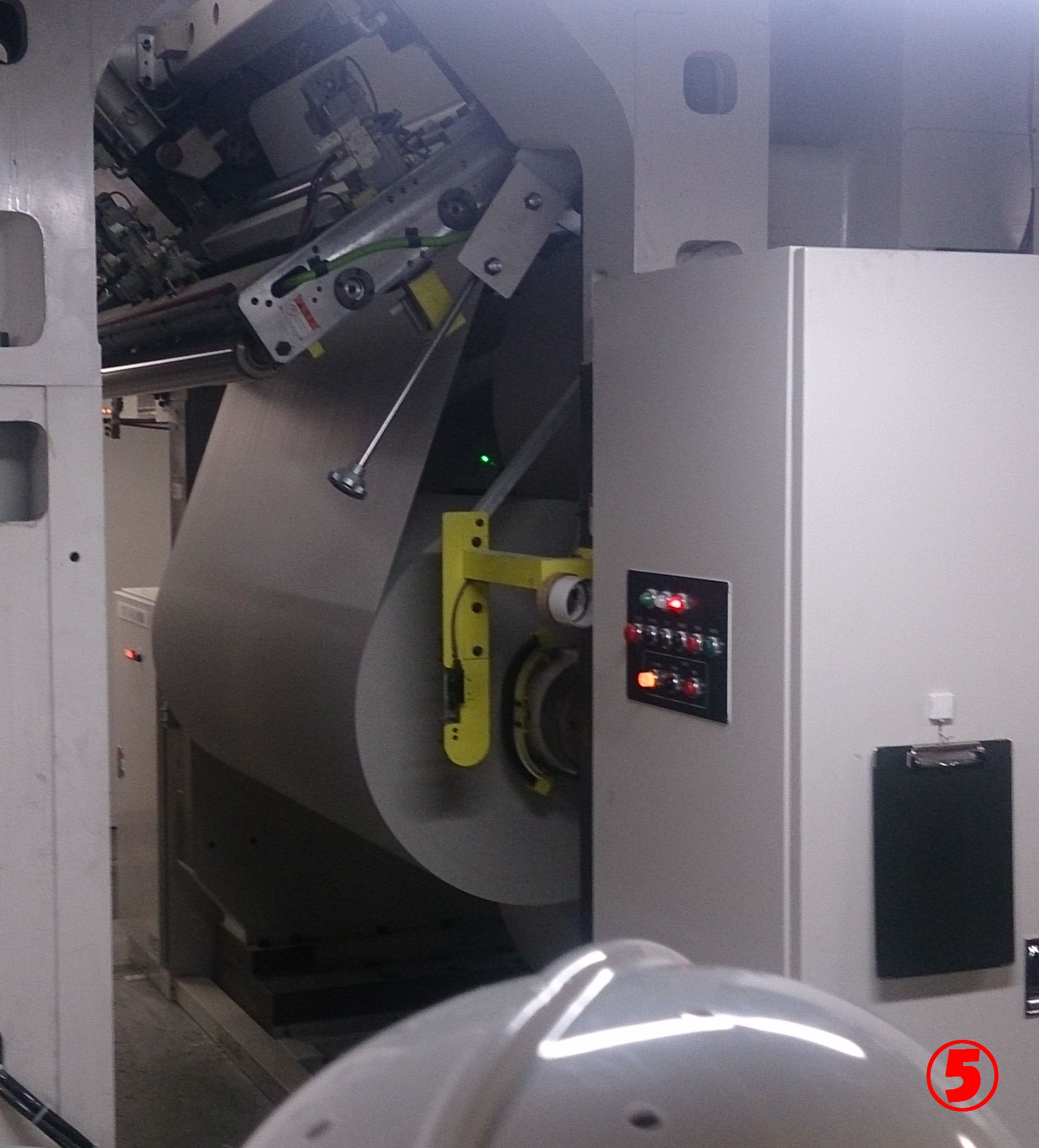
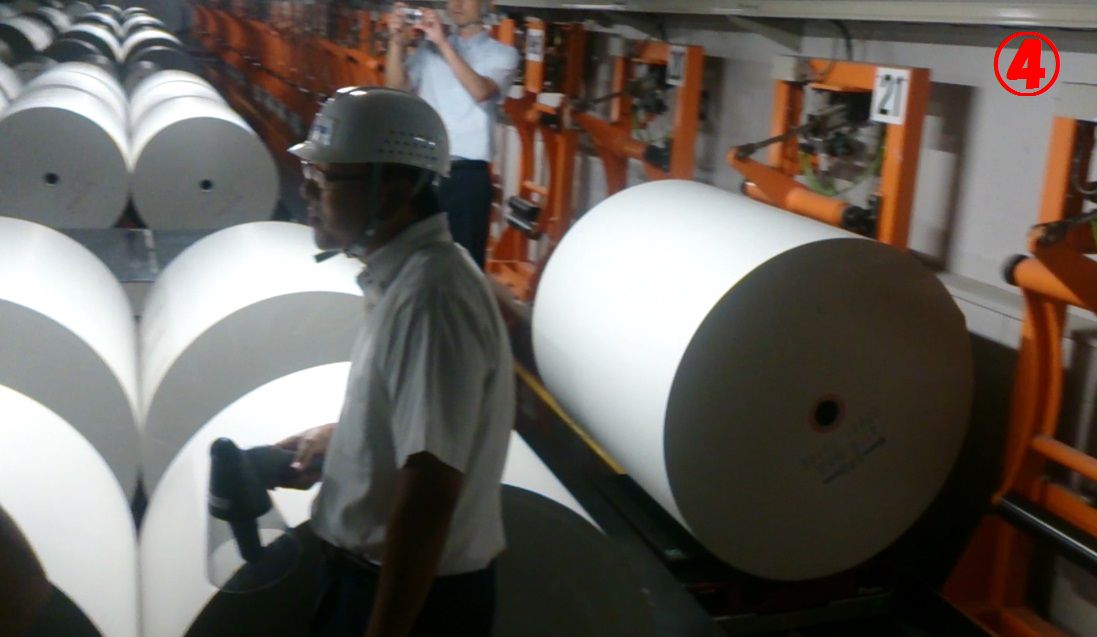
Next, paper ④⑤. Like a giant roll of toilet paper — each roll weighs about one ton. Rows fill the underground warehouse; Tōnichi uses about 25 rolls a day. Carts carry them automatically to the press (photo ④, right side shows paper on a cart); for safety the carts make a loud sound (the Indiana Jones theme). Paper is loaded in the press basement (photo ⑤) and fed up to the first-floor press.
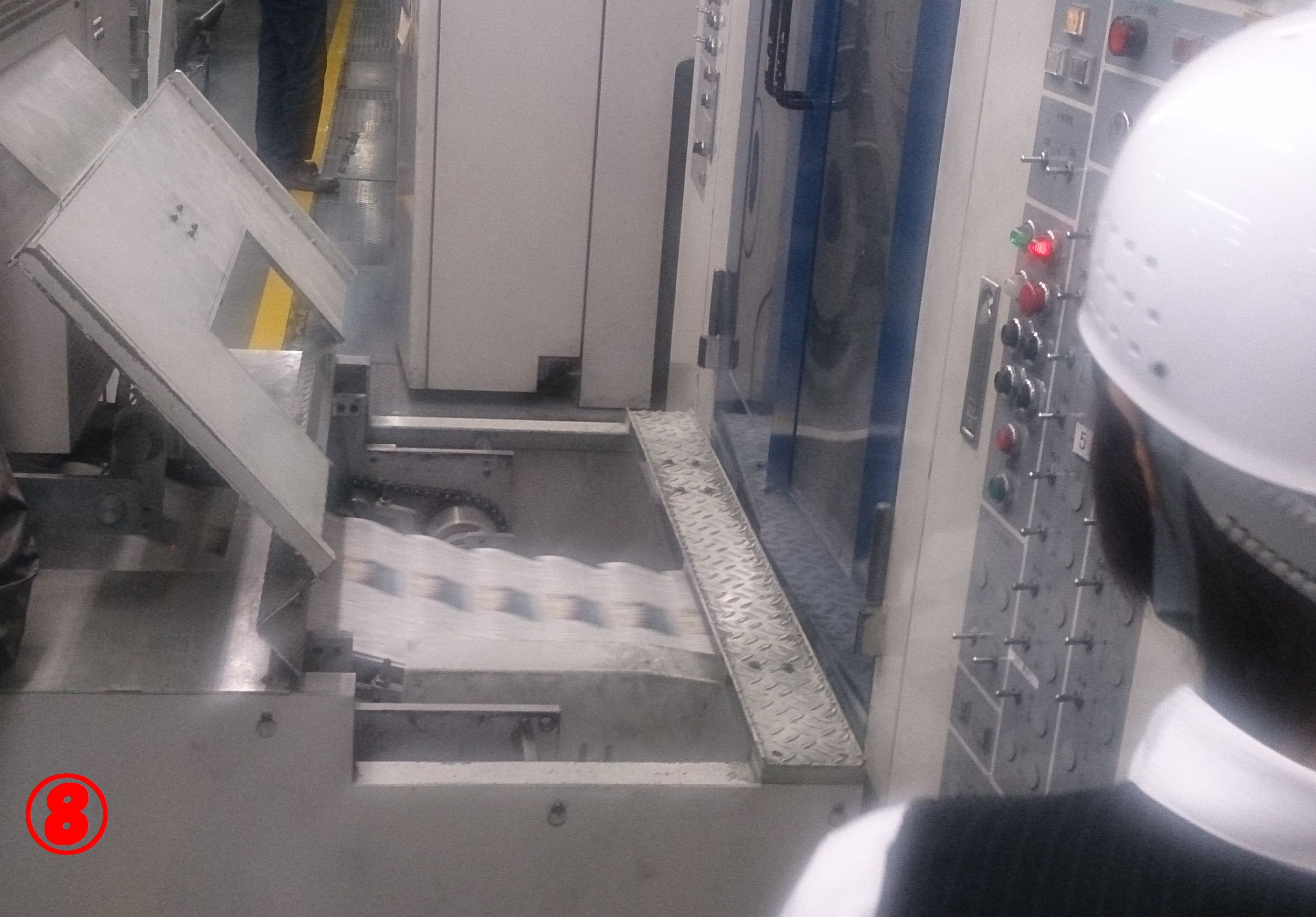
⑥ Plates go on the rotary press, and ⑦⑧ printing begins. When we visited, the evening edition had just started; they were still checking quality at low speed — in photo ⑧ you can see papers moving. At top speed papers flow at about 50 km/h — too fast to follow with the eye.
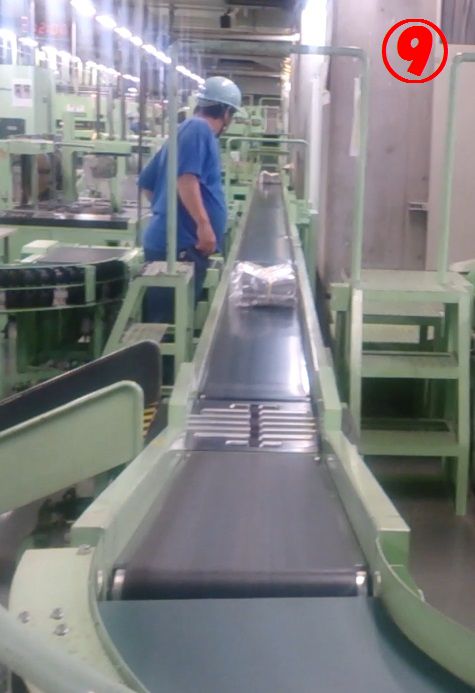
Finished papers are counted by computer, bundled with address slips bearing barcodes, and sent to shipping gates — photo ⑨.
Long ago, on an elementary school trip to a print shop, workers set type by hand and plates were heavy semicircular lead fitted to the drum — times change (sounds like grandpa?!).