

Step out of Palaceside Building for a lunchtime stroll to Edo Castle (the Imperial Palace). After cherry, fresh green, azalea and satsuki, iris in summer — then crape myrtle. But look at the water surface (minamo) and you find another kind of scen
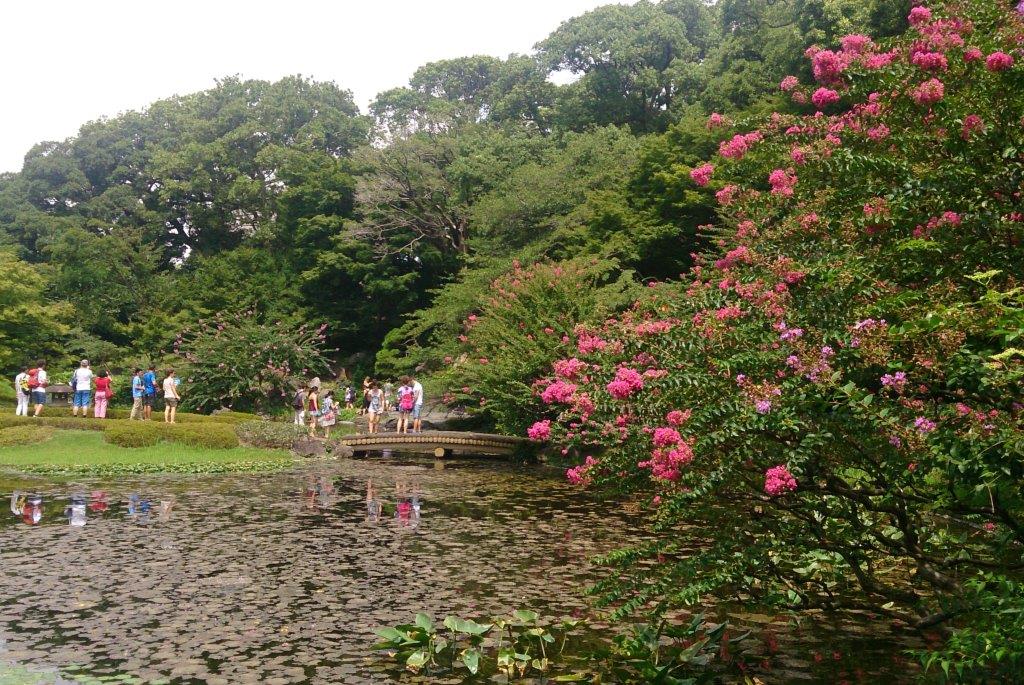
ery.
Around Ninomaru Pond in the East Gardens, deep pink crape myrtle is in full bloom, delighting foreign tourists = photo at right. As expected scenery — quite a picture.
This time, though, the theme is the water. First, hime-kouhone (dwarf nymphaea) = photo at top. Stems rise from the water, each bearing one vivid yellow flower about 3–4 cm across. Native to Japan and widely distributed from Honshu to Shikoku and Kyushu in the water-lily family; among relatives of kouhone, named for underwater rhizomes that look white and gnarled like bone. Flower language: “nobility.” They do seem to hold their heads high with dignity,
quite stately.
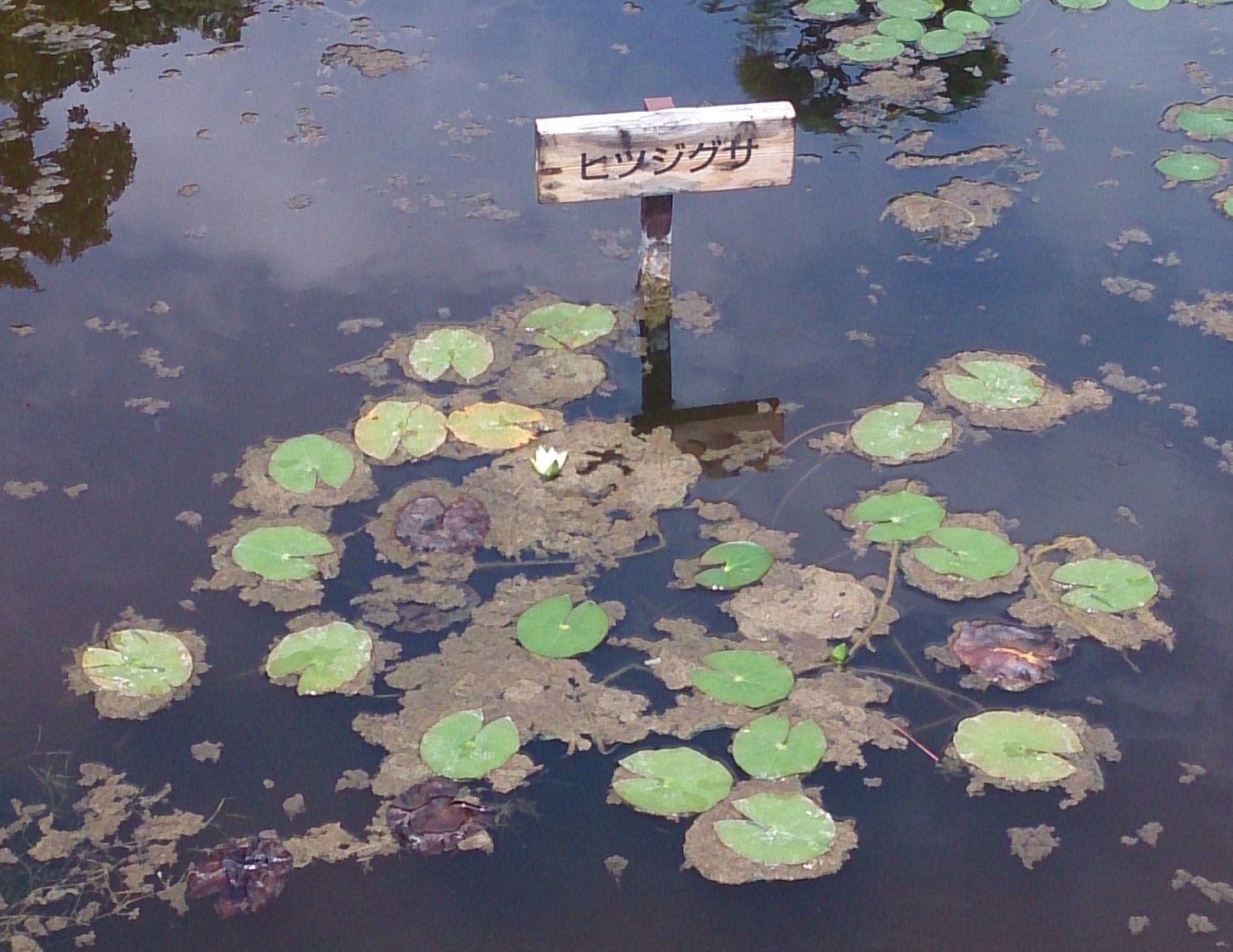
Next, hitsujigusa (sheep grass) = upper left photo — also water-lily family. One leaf and one flower float on the surface; flowers are 3–4 cm. Hard to tell in a close-up, but there are four sepals below and about ten white petals above, with yellow stamens peeking out — like a halved soft-boiled egg cut in a zigzag, perhaps. Said to be named for blooming around the “mi” hour (about 2 p.m.), though in practice they flower from morning to evening
. Also native. Flower language: “innocence” and “faith.”
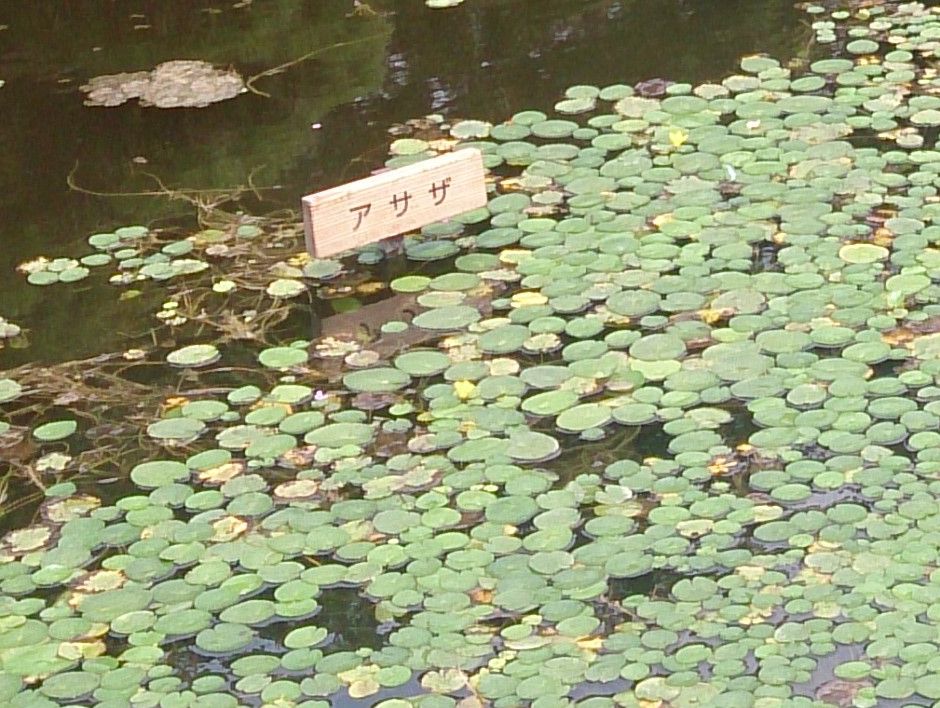
One more: asaza (shallow sand) = lower left photo — in the nightshade order, family Nymphaeaceae. Yellow flowers about 3–4 cm across with finely split edges like frills. Five petals, united at the base (sympetalous). Found not only in Japan but across Asia to Europe on the Eurasian continent. Flower language: “grace” and “calm.”
The East Gardens are open 9–17 (last entry 16:30), free for anyone. Closed Mondays and Fridays.