

Slipping out of Palaceside Building to walk the stone walls of Edo Castle (the Imperial Palace), next is Shimizu-mon. From Takebashi toward Kudanshita, it is less than five minutes along Shimizu Moat. Almost directly in front of Chiyoda City Hall. Advance along the long earthen bridge that divides Ushigafuchi and Shimizu Moat and you reach the gate. It is an entrance to Kitanomaru Park, not the East Gardens of the Imperial Palace; you can pass through toward the Budokan and Tayasu-mon and exit at Kudanshita. It is quieter than the East Gardens, with fewer people.
The sign beside the gate explains as follows.
“Shimizu-mon is a masugata gate in the northeast of Kitanomaru. It consists of a front korai-mon and, deeper to the right,
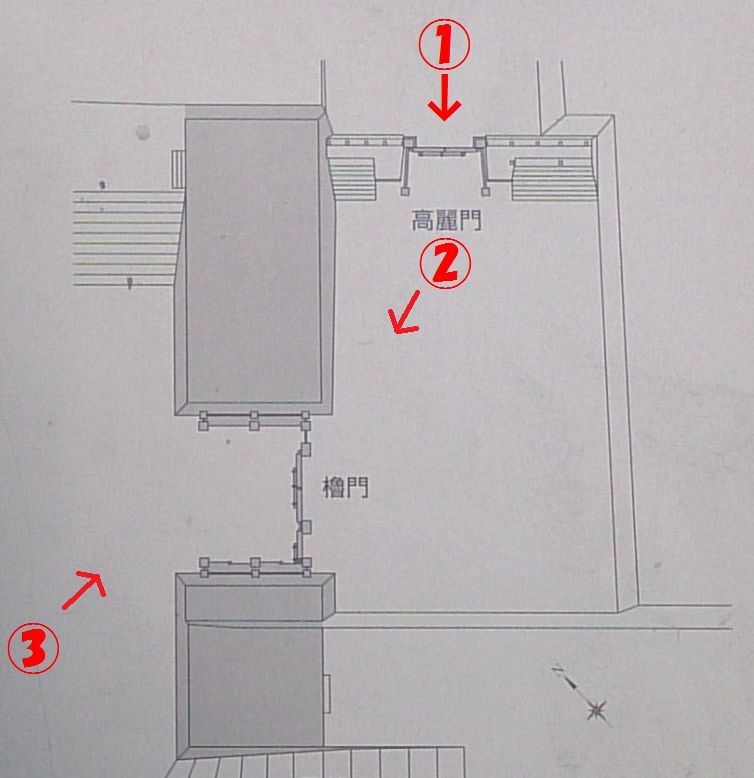
a yagura-mon. The original construction date is unclear, but the present gate is thought to have been built in Manji 1 (1658), from an inscription remaining on a hinge fitting of the korai-mon doors. The upper part of the yagura-mon, however, had been removed at an unknown time and was restored in repairs in fiscal 1961–66. Shimizu-mon is of high value as an Edo Castle remnant whose construction date is known, and together with the stone steps from the gate into Kitanomaru it strongly retains the Edo-period condition.”
That explanation covers it, but let us add a word on masugata gates, korai-mon and yagura-mon. Please read while looking at the plan at left, photos 1 and 3 below, and photo 2 above.
A masugata gate is a castle-entrance form: an L-shaped wall is set inside the gate, another gate is placed on the open side, and one must pass two gates to enter the
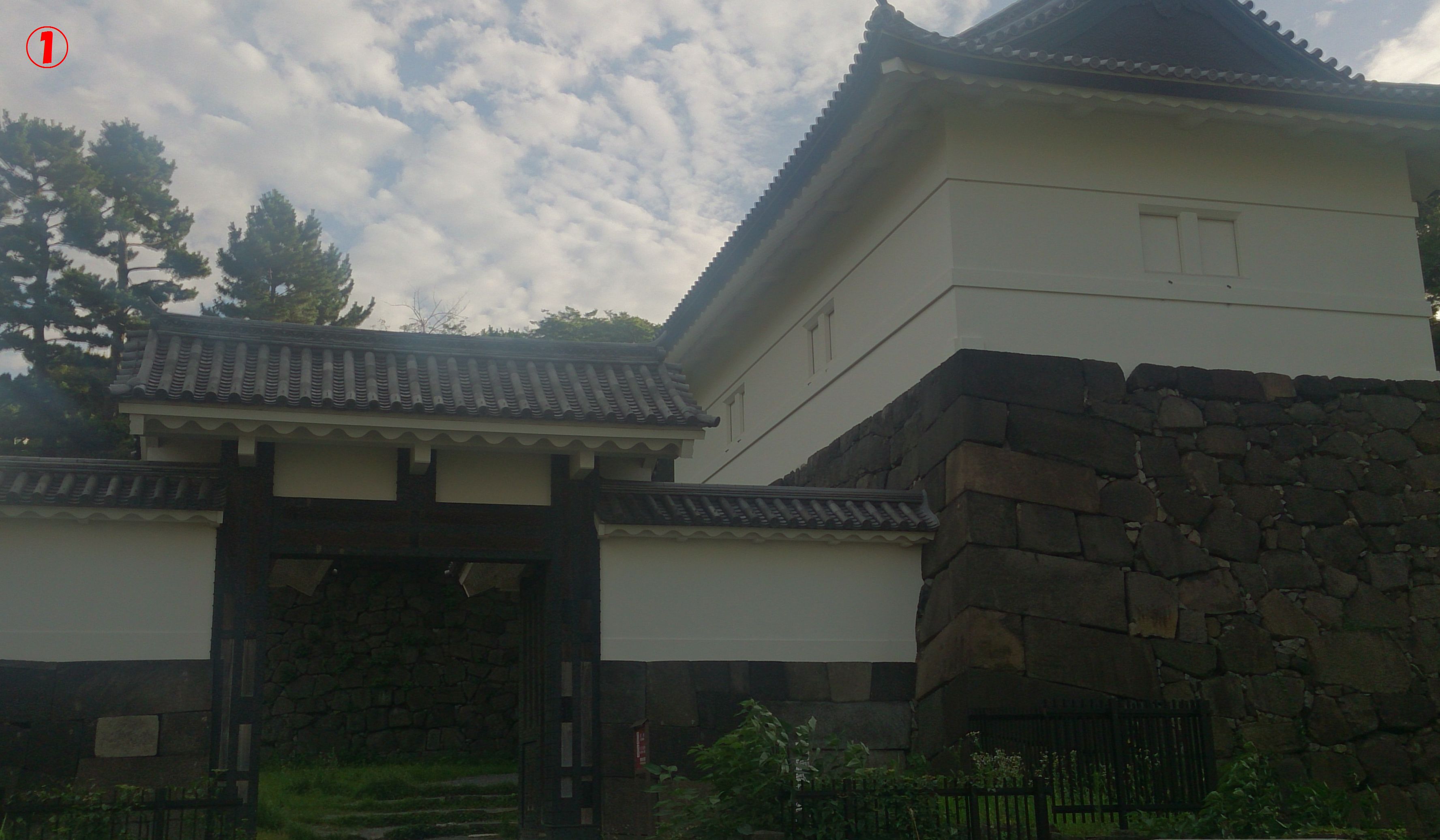
enclosure. Shimizu-mon is the same; generally a korai-mon (photo 1) stands outside and a yagura-mon (2, 3) inside the castle.
A korai-mon consists of two upright mirror posts and two inner bracing posts. A crossbeam is laid on the two mirror posts and covered with a small gabled roof; a small roof is also set between the mirror posts and the inner bracing posts. The roofs are kept small to reduce the defenders’ blind spots.
A yagura-mon has a turret above the gate and is also called a two-story gate.
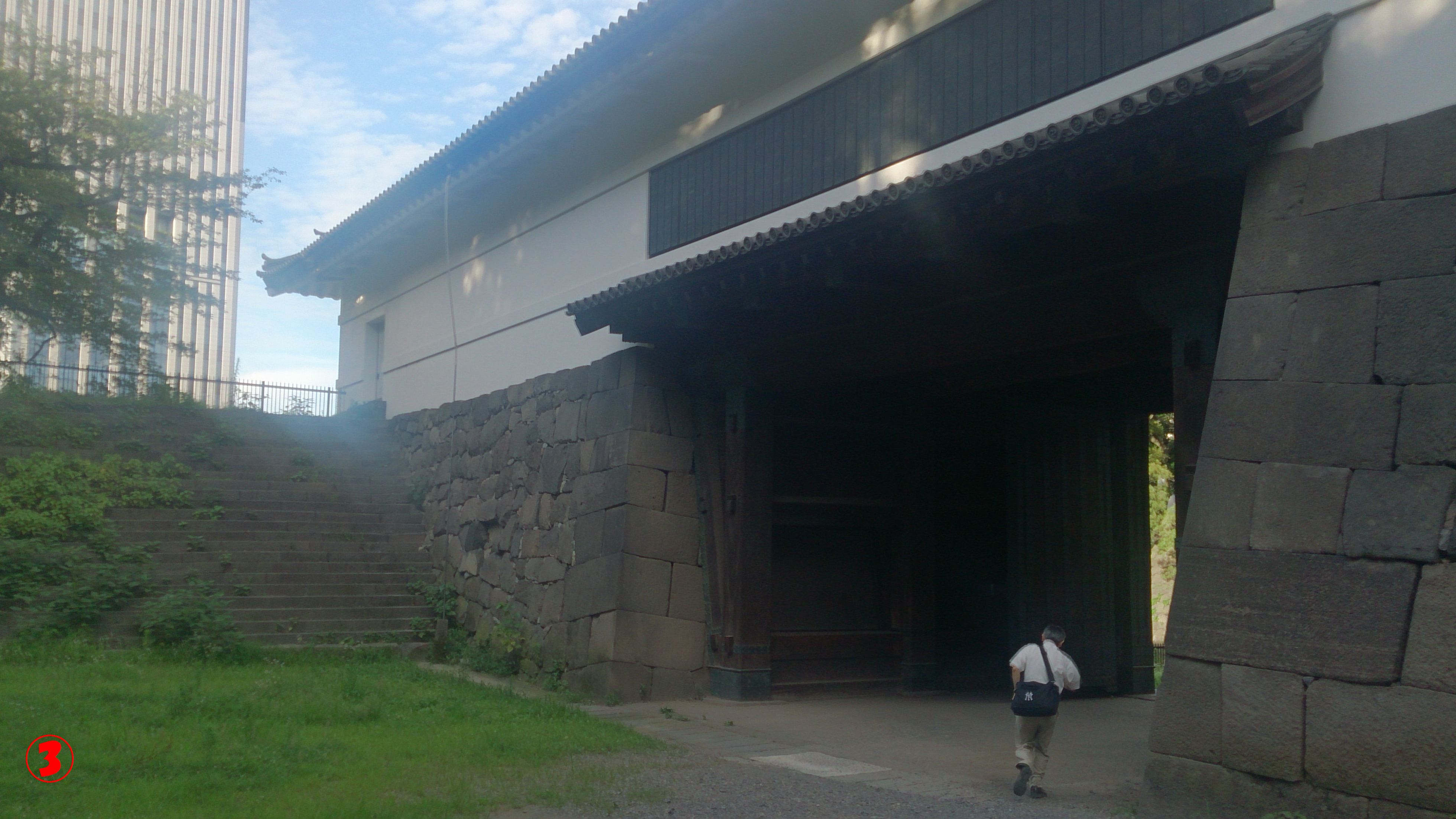
A single-story turret sits on the second floor, though as at Himeji and Kumamoto castles a double gate-turret is sometimes placed.
In battle the gate matters. If it is breached, the situation is grave. Even if the korai-mon is forced, one cannot go straight; at Shimizu-mon one must turn right to the yagura-mon, and the space inside the gate lets troops pile up, so they can be shot from the turret with guns and arrows. That is the intended
structure.
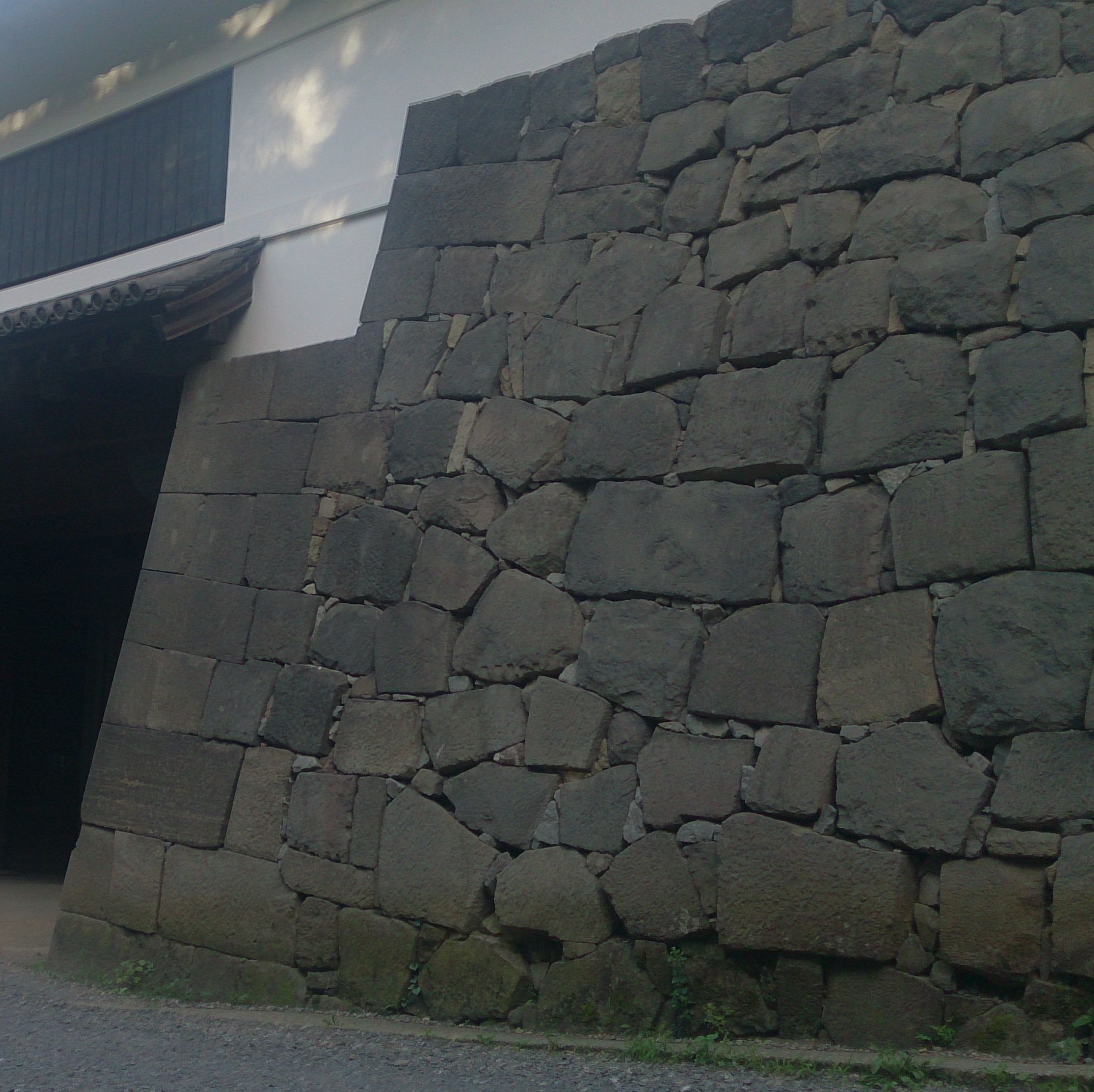
Ah yes — the theme was stone walls. The photo at left is a close-up at the yagura-mon. The gate edge is piled with neat cut stone and no gaps: “kirikomi-hagi.” Beside it (the right side of the photo) looks like “uchikomi-hagi,” with gaps packed with small stones.
We will continue with Shimizu-mon a little longer.