

It is not a particularly beautiful object, I am afraid—but what on earth is this?
Without a location it is, of course, impossible to guess. Yes: in front of Palaceside Building, at the roots of the planting in the green
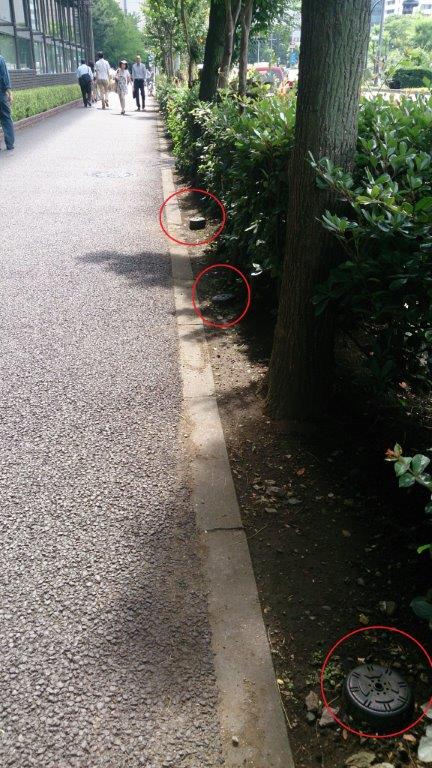
belt along Uchibori-dori, these sit every few meters (photo at left).
Open the cover and a faucet appears, to water the trees? That is a fair guess, but—wrong. The answer is a device that lets air into the soil. I am not sure of the ordinary noun, but gardeners call it an “aerator,” so “ventilation device” or “airing device” is about right. Some may picture the bubbling stones that keep aquarium fish from suffocating.
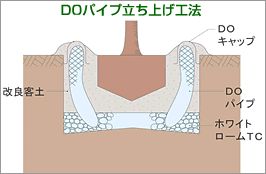
Those in the planting in front of Palaceside Building are a manufacturer’s “Oxygen Pipe DO Pipe” and “DO Cap”; what shows at ground level is the cap.
According to the maker’s website, as in the diagrams at right and below, the “pipe” is a porous material like the pumice used in the bottom of a flowerpot, formed into a tube. It is set vertically and the “cap” is fitted on top. Air then enters the soil and supplies oxygen to the roots.
If you ask what of it, the story might end there—but this green belt is part of Tokyo
Metropolitan Government’s “Tokyo Fureai Road Program,” under which companies that sign on manage plantings so roads stay pleasant to use. Palaceside Building joined and, in April 2007, planted about 50 crape myrtles (Lager
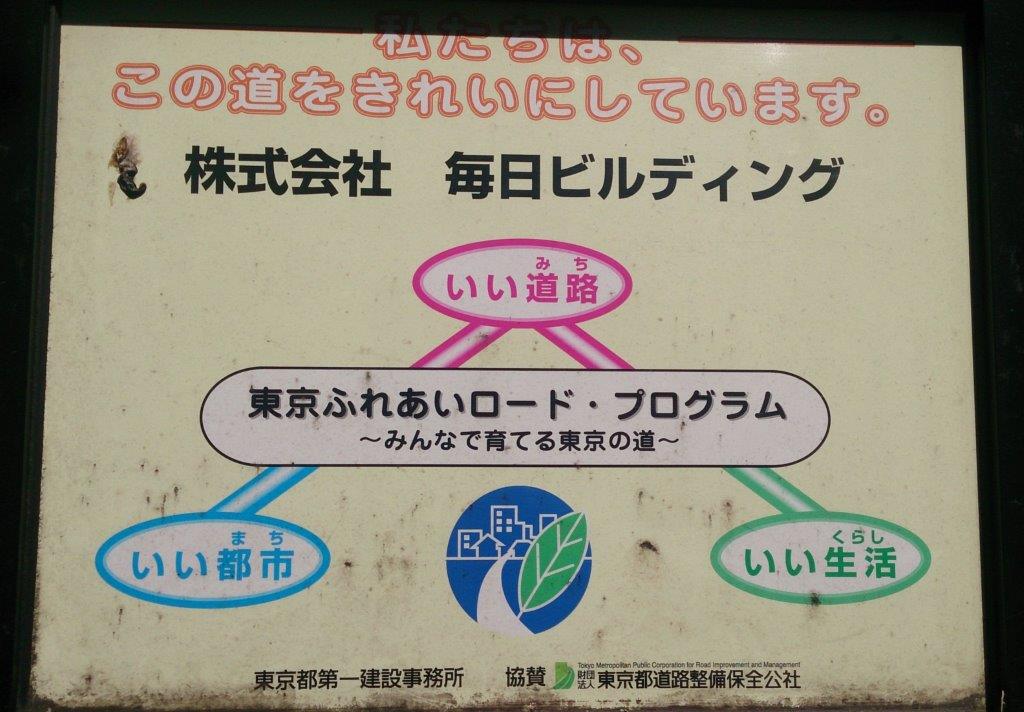
stroemia) along some 200 meters of green belt, and tends them. Some readers will know the small plate like the one below in the planting before the building’s east entrance. This pipe-and-cap setup is one of the devices that help the flowers bloom each year.
This year, perhaps from the heat, or because nearly ten years have passed since planting, the crape myrtles seem a little less vigorous. Managing living things is hard work.