

A long-delayed installment of the series of strolls out of Palaceside Building.
I walked Edo Castle at lunch. After the cherries of March–April, green suddenly overflowing, then from late April into May—azaleas. The aim was the East Gardens of the Imperial Palace. In front of Suwa Teahouse in the Ninomaru Garden they bloom in a sheet of red, purple, pink and white, like a carpet (photo above).
The Imperial Household Agency site’s “East Gardens flower news” says many Kurume azaleas are in bloom, and the plant note reads—
Kurume azalea (Ericaceae)
Also called Kirishima. Long planted in gardens around the country; on Mount Kirishima there are plants very close to the Kurume azalea. In April–May two or three red flowers open at the branch tips. Leaves are alternate, small and thick.
—so the explanation.
Many will know the name Kirishima (azalea). They are treated as the same; both have the scientific name Rhododendron obtusum. Some, though, speak of different roots: both based on mountain azaleas native to Kyushu, Kurume selected and crossed in the Kurume domain (Fukuoka Prefecture), Kirishima in Satsuma (Kagoshima). Others say Kirishima mixes Miyama-kirishima from the Kuju, Unzen and Kirishima ranges; that both include Miyama-kirishima; that Kurume is Kirishima further improved in Kurume; that Kurume leaves are a little larger than Kirishima, and so on. In any case the difference seems small.
Azaleas were originally widespread, mainly in Asia; Taiwan azaleas taken to Europe and horticulturally developed became “azalea,” also called “Western azalea” in Japan.
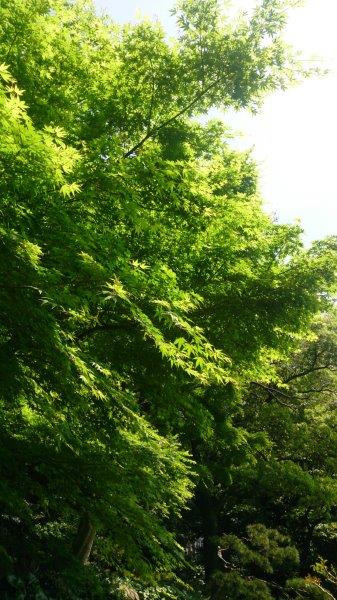
Temperatures have risen this week, but Ninomaru Garden has much else to see. Or rather, at this season just walking the East Gardens
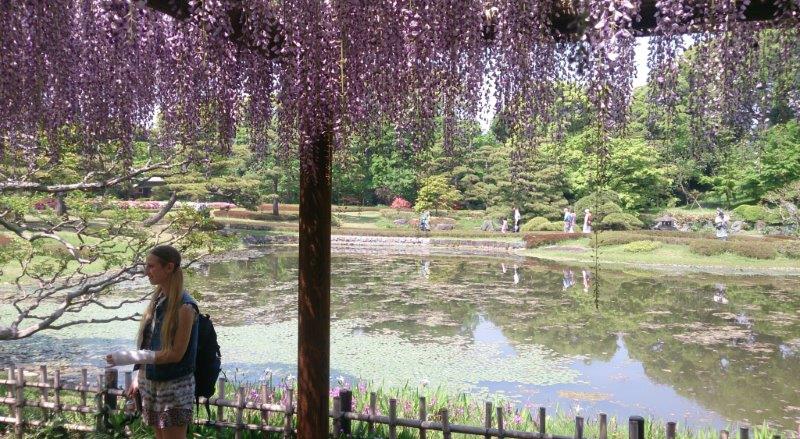
feels good. Maple green near Ninomaru Pond is beautiful (photos at left and above), and the wisteria trellis by the pond is at its peak (photo at right).
The East Gardens are open 9:00–17:00 (last entry 16:30), free to all. Closed Mondays and Fridays, but they will stay open on May 4 during Golden Week.